Tuesday, September 1, 2009

Disney Buys Marvel

mickey.pngiron-man-flies.gif

I stopped reading comics recently and have already developed the non-comics-reader’s defensive shell of weariness at the thought of trying to figure out what the various characters are up to these days — which is good. That will prevent any relapses, so I can move on to other topics.

Nonetheless, I’m grateful for my past ties to the hobby — resulting in things like (a) an idea for a graphic novel script I hope to devote much of my spare time to completing in the next few weeks, (b) likely seeing the movie Whiteout, featuring Kate Beckinsale as Antarctica’s sole cop, next week (even if it proves to be as lame as the trailers suggest) just because Scott Nybakken once introduced me to the writer of the excellent original comic (Greg Rucka), and (c) getting a voicemail from my mom letting me know that Disney just bought Marvel Entertainment for $4 billion. It’s just nice to know Mom’s keeping me informed.

The Wall Street Journal, in turn, informs me that a single Marvel Entertainment movie, Spider-Man 3, made nearly $900 million, so if I were Disney, I might buy Marvel too. Incidentally, this creates a new source of rivalry between Warner Brothers and Disney, since Warner owns DC. This now means Mickey Mouse and Iron Man are natural allies in a fight against Bugs Bunny and Batman, for those keeping track. But I’m not supposed to think like that anymore. It’s a corporate merger, not a fight between rodents and men. Have to keep telling myself that.

By the way, for anyone troubled by the fact that very-recent movies (often ones that aren’t very good) keep being declared the highest-grossing ever, here’s the solution: the far more classics-filled list of biggest box office hits adjusted for inflation. With Gone with the Wind, the original Star Wars, and the comparably awesome Sound of Music up at the top, the Great Chain of Being suddenly seems righted again.

Monday, August 31, 2009

DEBATES AT LOLITA BAR: "Should NY Reopen the 9/11 Investigation?"

wtc.jpg

Wed., September 2, at 8pm, with:

Sander Hicks* arguing yes.

Saul Devitt** arguing no.

(And the group NYCCAN fighting in court, meanwhile, over whether to make it a ballot initiative question.)

Hosted by Todd Seavey and moderated by Michel Evanchik.

Free admission, cash bar.  Basement level of Lolita Bar at 266 Broome St. at the corner of Allen St. on the Lower East Side of Manhattan, one block south and three west of the Delancey St. F, J, M, Z subway stop.

This is, in effect, our second of three debates on “conspiracy”-related topics, last time having been UFOs and October being the validity of Obama’s birth certificate.  So, whether you like it or not, we will have gone “spacer” > “truther” > “birther,” as the slang puts it.  You can decide which if any stop to get off at — but best to come hear the arguments first.

*Sander Hicks argued the case for a 9/11 inside job two years ago at Lolita and now argues more broadly that more investigation urgently needs to be done into the subject.  He has also made that case in his book The Big Wedding.  And you may have seen the bookstore/cafe he used to own, Vox Pop, in the news recently because of the mysterious decapitation and theft of the head of the store’s Statue of Liberty replica (followed by the appearance of a creepy, anonymous, al Qaeda-esque video of same).  Brooklyn terror cell?  Extremely odd government intimidation tactic, as Sander suggests?  Prank by Brooklyn art students majoring in video production?  Publicity stunt?

None can say — but with a little networking assist from me, Sander got a chance to comment on another video — one critical of 9/11 Truth claims — for a New York Post piece by Maxine Shen, if you’d like a flavor of his thinking — and this time they didn’t call him a “java jackass,” as they did in a previous article.

I will say this: Even if Sander’s specific theories prove to be inaccurate (something you can mull as an audience member at Lolita this Wednesday), they are less strange than a conspiracy theory promulgated by one of his acquaintances, who thinks that that Air Force One fly-by of (the real) Statue of Liberty a few months ago was the result of Pentagon jets (in cahoots with the Kremlin) attempting to shoot down Obama, who narrowly avoided death by flying to a highly-visible location (while on his way to visit the U.N. and convey world-saving information about swine flu).  Bet you haven’t heard that one before.

**Saul Devitt is a relatively straightforward computer programmer and would-be debunker who keeps up on the latest odd tech claims, whether false or, as in the case of doctors giving blind people sight by transplanting teeth into their eye sockets, odd but true.  Perhaps he also has an opinion on the claim that traces of “nano-thermite” government explosives were found in the ruins of the World Trade Center (a claim admittedly promulgated by a scientist who used to say he’d found archaeological evidence of Jesus having visited South America).

Regardless, we will sort some of this out on Wednesday, and if you don’t attend, you may just regret it for the rest of your life.

Sunday, August 30, 2009

And Then There Are the Protestants

Not wishing to look like I was singling out Catholicism as the only questionable faith with yesterday’s entry, I should stress that I doubt all supernatural and paranormal claims, not just, say, Mormonism (and we should be suspicious of people who only pick on a few favorite paranormal targets, as though with a sliding scale of skepticism).

So let me augment yesterday’s skepticism about Catholicism with a reminder that Martin Luther was a bit of a brutal fanatic who at times either encouraged or acquiesced in massive attacks on the Jews.

But I’ll say this for Martin Luther: He knew how to come up with a snappy title. Before those pogroms, he had opposed the violence of full-blown peasant revolts in a volume with the wonderful title Against the Murderous, Thieving Hordes of Peasants. Maybe that should be my new blog slogan.

Saturday, August 29, 2009

Uganda Is More Christian than the U.S.

I’m scheduled to attend a Catholic (and conservative) wedding today, and I hope it won’t look like ingratitude toward my hosts (who I’m sure are too busy to read this blog today) if I pick this occasion to remind people of my love-hate relationship with religion and the religious right.

I say love because, despite my atheism, I think the moral and social effects of religion — the stuff the left usually complains about — are actually often quite positive, and I am not indifferent to the deep passions that people like C.S. Lewis represent with noble lions (which they worry shallow secularists must lack).  It would indeed be awful if people lacked those sorts of deep passions, and if religion evokes them, it must be contended with.

I say hate — though I swear I don’t literally mean hate — because I don’t think the underlying supernatural claims are true and because there is a tendency, especially on the right, to think religion explains and causes all the good things in life.  Is Europe (just slightly) more socialist?  Must be because they’re so much more secular over there.  Was the USSR oppressive?  Must be because they didn’t believe in God.

But if you think a country’s level of religiosity is a short-cut to seeing how socially-functional and civilized it is, consider just one country that’s more Christian than the U.S.: chronically war-ravaged, brigand-plagued, impoverished Uganda.

•Their populace is 85% Christians to our mere 78%-and-shrinking…

•…with Catholics about 41% of their population to our 24% or so.

So are they in better shape than the U.S. culturally?  Are you moving there soon?  If so, beware the occasional witch-led armies of fanatical soldiers who think rocks can be used as magic hand grenades and that sort of thing, which Uganda seems also to have in rather larger numbers than we do.

Friday, August 28, 2009

Nearly Everything Is Bad

Whether religious or secular, people are naturally inclined to think the universe is in some sense a just place where things tend to work out. But what if they’re wrong? I’m not a naturally gloomy person myself (I don’t think), but what if, for example, all ten of the following rather negative thoughts are true? It’s not clear that’s logically impossible.

•Political criticisms always get channeled into one of the party lines. Almost nothing can be accomplished through politics.

•The scientific establishment is usually wrong.

•Supernatural and other anti-scientific claims are all false.

•Capitalists lack the ethics to rescue their own system from decline, yet all anti-capitalist philosophies are wrong and destructive.

•Conventional sex differences lead to malevolent behavior, as do attempts to alter those differences.

•Misanthropes tend to be self-serving people making limited criticisms based on one of the agendas alluded to above rather than harsh, constructive critics who might truly improve humanity.

•Terrible behavior tends to be rewarded and thus to grow more commonplace (witness the spread of deliberately rude “Game”-style dating, which is now so widespread as to border on becoming etiquette rather than the novel assault on etiquette it so recently seemed).

•Entertainment reinforces the easy intuitive grooves that lead to the aforementioned problems.

•Art that, by contrast, is consciously disturbing or alienating tends merely to reinforce different, often worse, intuitive grooves.

•People are irrational — and as a result are often selfish and sadistic without even succeeding in increasing their own happiness. They consciously or unconsciously choose pointless conflict over peaceful cooperation in countless situations.

Thursday, August 27, 2009

The Personal May Need to Be the Political -- But Not the Other Way Around

I wonder if healthcare “reform” will in fact pass now simply because so many people will think “Ted Kennedy would have wanted it that way.”  Perhaps humanity’s single biggest problem is that the human brain longs to navigate complex situations with instincts built for sizing up simple interactions between a few people — deciding who seems nice enough to share food, who seems likely to throw a rock at you, etc.

Even cultural-big-picture philosophers Alasdair MacIntyre and Charles Taylor (despite the latter in particular condemning the West’s tendency to focus ever more on interior, psychological struggles instead of big questions about the wider world) are, like religion, encouraging people to think in terms of “personal virtues” (a certain vision of a classical hero type), in a world where our biggest problems may increasingly hinge on more systemic thinking: economics, filtering sound science from pseudo-science, escaping the sclerosis of bureaucratic politics, etc.  The temptation to think that simply being a warm-hearted person or doing what (Jesus, Howard Roark, Ulysses, whoever) would do is enough to solve larger systemic problems is dangerous — comforting, heartwarming, reassuring, and frequently wrong, a legacy of Christianity’s emphasis on reforming one’s own soul, mutated by modern liberalism’s self-centered emphasis on personal growth, politically correct thought, consciousness-raising, and the like.

At the same time, though, for a social system to be sustainable, the core tenets that make its broader, more far-flung rules function must seem to average people to be observable/felt in their own lives (both in the sense of being confirmed by observation and in the sense of inviting everyday participation, lest the moral rules be left to self-interested elites to administer).  So the silver bullet we need, with ever-greater urgency in a world of increasing media noise, is a code that is easily enacted on a personal level but has the broadest possible beneficial implications for governance and for the proper maintenance of social processes that dwarf the individual and transcend the current generation.

And that’s where, it seems to me, the principle of property comes in, with all its myriad positive implications, from the narrow personal level to the establishment of global (and someday perhaps even interplanetary) trade and peace.  Anything foisted into policy debates mushier than property adherence is either directly counterproductive or at best a dangerous distraction.  Particularly dangerous, then, are the growing number of liberals, conservatives, and even libertarians who say, predictably, “I see value in property-adherence — but here are the unique new embellishments I would add to that dry, simplistic moral/legal rule…”

That way, as we’ve seen, lies the stagnation of the welfare state, the ostensibly-regulated economy, mercantilism, attempts to steer whole cultures through clumsy military strikes, the near-worship of nature and biological processes combined with a disregard for often subtler economic processes, and selective invoking of God’s purported will.  End this madness.  Lay down property lines — secure and clear and legally enforceable — across the world, and let humanity begin the recombinatorial process of trading and thereby improving the world, one mutually-beneficial exchange at a time.

Wednesday, August 26, 2009

Fop Rock Note

upper-crust-faces.jpg

Obviously, I am pleased to see that both Adam Ant and the Upper Crust made it into the Wikipedia entry for “fop” — bringing us one step closer to the ideal world in which knee breeches and mohawks signal a culture balanced between reason and productive anarchy (even if one of the Upper Crust’s former members, Ted Widmer, has been an indentured servant of some sort at that most benighted of plebian institutions, Brown University of the Providence Plantation).

Tuesday, August 25, 2009

A Seavey Bibliography I Never Made

I should have mentioned when I plugged The Huffington Post Complete Guide to Blogging a few months ago that I’m quoted in it as calling “I don’t know” the three most important words in the language.  (And they are, you know.)

But in the interests of full disclosure, here is the list of all the books in which I am cited or at least thanked, per Amazon’s search function (seventeen books in all).

By no means are all the citations positive, I should note.  In the case of the ever so slightly negative-sounding Thinker, Faker, Spinner, Spy: Corporate PR and the Assault on Democracy, I am apparently described as part of “the Wise Use group in the United States,” perhaps a specific organization I’ve never heard of or, since it’s from a passage about tobacco, maybe a catch-all term for people who wish taxes and fines taken from tobacco companies were put to health-enhancing uses, which is not exactly my mission either, but whatever.  Maybe it just means I think smokeless tobacco is safer than smoked tobacco, which is a perfect statement of fact (and a very important one, for public health purposes, as we often note at ACSH) but is nonetheless scandalous heresy for a surprising number of ostensibly intelligent public health types.

Without further ado, I give you Todd Seavey:

The Huffington Post Complete Guide to Blogging by The editors of the Huffington Post and Arianna Huffington (Paperback – Dec 2, 2008)

Woodstock: An Encyclopedia of the Music and Art Fair (American History Through Music) by James E. Perone (Hardcover – Jan 30, 2005)

The Forbidden Apple: A Century of Sex & Sin in New York City by Kat Long (Paperback – Mar 1, 2009)

Invisible Frontier: Exploring the Tunnels, Ruins, and Rooftops of Hidden New York by L.B. Deyo and David Leibowitz (Paperback – Jul 22, 2003)

Liberty and Tyranny: A Conservative Manifesto by Mark R. Levin (Hardcover – Mar 24, 2009)

The I Hate Corporate America Reader: How Big Companies from McDonald’s to Microsoft Are Destroying Our Way of Life (The “I Hate” Series) by Clint Willis and Nate Hardcastle (Paperback – Dec 19, 2004)

What to Do When You Don’t Want to Call the Cops: or A Non-Adversarial Approach to Sexual Harassment (A Cato Institute book) by Joan Taylor (Hardcover – Oct 1, 1999)

Made in America: The Most Dominant Champion in UFC History by Matt Hughes and Michael Malice (Hardcover – Jan 1, 2008)

The End of Food by Paul Roberts (Hardcover – Jun 4, 2008)

Give Me a Break: How I Exposed Hucksters, Cheats, and Scam Artists and Became the Scourge of the Liberal Media… by John Stossel (Hardcover – Jan 20, 2004)

Radicals for Capitalism: A Freewheeling History of the Modern American Libertarian Movement by Brian Doherty (Hardcover – Feb 12, 2007)

Selling the Dream: Why Advertising Is Good Business by John M. Hood (Paperback – Sep 29, 2008)

Thinker, Faker, Spinner, Spy: Corporate PR and the Assault on Democracy by William Dinan and David Miller (Paperback – Jun 20, 2007)

Overheard in New York UPDATED: Conversations from the Streets, Stores, and Subways by S. Morgan Friedman and Michael Malice (Paperback – Feb 5, 2008)

Digital Culture: Understanding New Media by Glen Creeber and Royston Martin (Paperback – Dec 1, 2008)

State of the World 2003 by Worldwatch Institute and The Worldwatch Institute (Hardcover – Jan 2003)

Hong Kong at the Handover by Bruce Herschensohn (Textbook Binding – April 26, 2000)

Collect them all.  Let us hope I can at least continue my rate of approximately one book mention per year of my post-college life.

Douchebag Redux: Most Stressful Cities

Per a Forbes.com piece, the top five most stress-filled cities in America are:

1. Chicago

2. Los Angeles

3. New York (feel the pride)

4. Cleveland (is there any upside here?)

5. And, yes, Providence, RI

Brown: top of GQ’s “douchebag” list yesterday, in a stressed out city today, no longer as reputationally strong according to my mom, and last I heard about to suffer a rich-kids student surtax to boot — sucks to be a Brown student any way you slice it.  Perhaps it’s time to just shut the place down and turn it into a petting zoo.

P.S. But I’ll still say nice things about Prof. Morone’s book The Democratic Wish in October.

The GOP Loves Medicare

I started saying over a decade ago that as the population’s average age increases, we’d see both major political parties “coincidentally” reformulate their philosophies around whatever elderly citizens wanted, even if it meant the Democrats abandoning their ostensible New Left ties to youth and progress and innovation and the Republicans abandoning their opposition to big-government programs, since Medicare and Social Security are the biggest of the big.  Not surprisingly, but nonetheless shamefully, the Republicans are apparently issuing a “manifesto” (as if such things ever actually articulate principles these days) denouncing any cuts to Medicare, capitalizing on seniors’ fear that Obama’s (in fact big-spending) healthcare reforms might limit their goodies.  Bush’s prescription drug plan was bad enough, but at least the argument could be made that prescription drugs, properly used, would be a net cost-reduction (rendering unnecessary more expensive interventions).  Now we see the Republicans, long ago the party of markets and limited government, simply cheerleading for sustained spending.  Two socialist parties, one angry at slightly different things than the other.  No clear way out.

A sad sidenote is that when I imagined the parties turning grey-minded all those years ago, I at least figured they’d come up with some ostensible philosophical rationale — the left perhaps arguing that seniors have “served the community most” and so deserve the massive redistributions from young newcomers they receive, the right perhaps making some sort of traditionalist argument about honoring revered elders.  Instead, of course, both sides just watch the polls and jockey for constituent-serving electoral advantage.  If the intellectuals at least get out of the habit of providing the two parties with post-hoc philosophical rationales, that would be a tiny step forward.

Monday, August 24, 2009

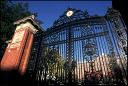
Brown: The Douchebag's Guide to Failure

van-wickle-gates-at-brown.jpg

I checked the September issue of GQ to see if it quoted me — not because I assume all magazines are likely to quote me at some point, though that would be nice, but because one of the writers, Andrew Corsello, interviewed me for a piece he was working on.

That piece hasn’t appeared, but I was made almost as happy by what did: GQ’s list of “America’s 25 Douchiest Colleges” (i.e., most obnoxious), and I think you know what institution came in at the top of the list, especially if you read all my Retro-Journal entries about going there. Yes, it’s Brown University — where, not coincidentally perhaps, the aforementioned Mr. Corsello went, writing comedy alongside me for the Film Bulletin and producing stuff that sounded not unlike GQ’s description of Brown (which, by the way, narrowly beat #2 Duke, despite some of my favorite people coming from or going to the state of North Carolina):

AFFECTATIONS: A belief that grades, majors, and course requirements are just another form of cultural hegemony; using the word hegemony.

IN TEN YEARS, [if you went to Brown, you] WILL BE: Living with your family in an old house that you quit your job to refurbish yourself (by overseeing a contractor) with painstaking historical accuracy in a formerly decaying section of the city that’s recently been reclaimed by a small population of white guys in hand-painted T-shirts who are helping you put together a health care fund-raiser for MoveOn.org, and meanwhile being furtively obsessed with the growth and decline of your sizable inheritance and carrying on an e-mail affair with a stripper, all while leading a campaign against gluten and dabbling in absinthe.

DOUCHIEST COURSE OFFERING: English 200: On Vampires and Violent Vixens: Making the Monster Through Discourses of Gender and Sexuality.

HONORABLE-MENTION LIMOUSINE-LIBERAL INSTITUTIONS: Duke, Reed, Oberlin, Wesleyan, Bard, RISD.

Down at the bottom of the list are #25 University of Virginia and #24 University of Texas — the latter being where studied (and near where now dwells) my friend L.B. Deyo, the sort of man with whom the Brown alum’s hypothetical night of absinthe-drinking, which might hypothetically have gone rather badly, might well have been conducted. (UT is also the sort of school where, hypothetically, the stripper the Brown alum corresponded with might well have lived, since Austin is weird that way.) In any case, Mr. Deyo gets the credit for this blog entry’s subtitle, since he once offered it, glum and deadpan, as the hypothetical title of his next book, causing me to giggle periodically for a good ten minutes or so, while he remained stone-faced, as he does so well.

And speaking of books and things that quote me, tomorrow a list of all the books, according to Amazon, that do so.  By the way, my mother’s reaction to news of Brown topping the GQ list was to observe that Brown doesn’t seem to crop up on the top of real lists of important colleges the way it used to.  Great.  $100,000 in 1991 money to end up eighteen years later on top of the douchebag list.  And I actually turned down Harvard, you know.  And Columbia.  And Princeton.  And Cornell.  The whole Ivy League except Yale, really — to which I didn’t apply because the world-famous divinity school had me worried (as an ignorant teen) that the place would be full of Bible-thumpers.  Arguably beats douchebags, though.

Sunday, August 23, 2009

Ten Libertarian Items, from Town Halls to Toad Hall, from Galt's Gulch to the Congo

mr-toad.jpg

•Engage in elite philosophical debate all you like, but in America, at least, you need the masses on your side at some point, so it’s nice to see the populist upsurge against socialized medicine at the town hall meetings — and articles like this one about an elderly miner’s wife who’s had all the big government she can stand.  Shame on any libertarian or conservative technocrats who’d rather fault such people for their ignorance, incivility, or missteps than fan the flames of revolt.  The public ain’t perfect, but they’re necessary.  (I almost wish last week’s Manhattan Project gathering had been as boisterous — maybe the Sept. 16 one will be, if you’re there.  No real party line, I swear.)

•If you think the crowds seem rowdy at today’s town halls, you should read about the ones two centuries ago in America — about one step removed from mob rule, if that.  I’ll write more about that — and James Morone’s book The Democratic Wish — during my “Month of Utopia” blog entries throughout October.  America needs more anarchy, after all, especially on the right.

•Since politics is often talk (which beats constant violence, I suppose), it was amusing to see even our nation’s chief diplomat, Sec. of State Hillary Clinton, getting snippy at a youth in Congo for daring to ask what she thought Bill’s opinion would be on something.  Hillary snapped that she’s not channeling Bill Clinton, though she might more colorfully have added “because I’m already channeling Eleanor Roosevelt” or even “I can assure you Bill Clinton is not inside me.”

•Getting back to utopia for a moment, though: Ali Kokmen informs me we may soon be able to escape all this to Galt’s Gulch, since Charlize Theron has expressed interest in doing the notoriously perpetually-delayed Atlas Shrugged film as a miniseries.  Now would be a good time, people.

•If we can’t have Atlas Shrugged, though, maybe the next best thing would be a big-budget adaptation of Thidwick, the Big-Hearted Moose (who eventually rids himself of all the lazy parasites living in his antlers) — an excellent metaphor for the evils of the welfare state that was apparently made into a film by the Soviets, of all people.  Odd.  By contrast, I don’t think you’d ever see the story survive intact as a script in today’s Hollywood — they’d have to change it to make the parasites who beset Thidwick into real estate developers or something instead of mere freeloaders and squatters, or “shirkers,” I suppose the Soviets would have said.

There are two ways to live, people: produce or just steal stuff from others, and most of politics and philosophy, unfortunately, is an attempt to rationalize the latter.  It’s as obvious a problemn when Dr. Seuss points it out as when Ayn Rand does.  Don’t steal.

•Hollywood is in fact doing an environmentalist Lorax movie, unsurprisingly — but the impending movie about the author of Wind in the Willows is more up my neo-traditionalist alley, even if both smack of anti-industrialism.

•In a world where people still think an economic crisis means it’s time to raise taxes (as Don Boudreaux laments in the Richmond Times-Dispatch) and where…

•…even Bruce Bartlett, a man sufficiently free-market conservative to call Bush an Impostor conservative (in his book of that title) has low enough standards to place the label of conservative on John Maynard Keynes, one shouldn’t get too hopeful about laissez-faire messages getting out.  On the bright side, though…

•…it’s sort of fun just seeing the New York Times non-judgmentally carry book descriptions like these atop their bestsellers list (where millions of eyeballs see them):

#1. CULTURE OF CORRUPTION, by Michelle Malkin. (Regnery, $27.95.) President Obama and his team of tax cheats, petty crooks, influence peddlers, and Wall Street cronies…

#4. CATASTROPHE, by Dick Morris and Eileen McGann. (Harper/HarperCollins, $26.99.) Stopping President Obama before he transforms America into a socialist state and destroys the health care system.

•And if we have reached the socialist, totalitarian point where even foie gras is illegal in some places, at least there’s this consolation: sucking rubber ducks can still save your life.

Saturday, August 22, 2009

"Avatar" vs. "District 9”

district-9.jpg

Last night, I saw the fifteen minutes of IMAX 3D teaser footage from James Cameron’s Avatar (the full film due out in December), and I fear Cameron has a $237 million bomb on his hands.

Not that it was bad, really, but it’s aiming so high, the hype’s already so big, and the end result is really just another one of those “guys-in-loincloths fight to save the rain forest and ride dangerous beasts” movies that you expect to be rated G and see for sale from some not-quite-Disney company at the checkout counter, except it’s ostensibly on another planet (and has some Cameron-style space marines thrown in). But it feels less like an alien world and more like whatever mythical rain forest the aforementioned not-Disney movies took place in.

And despite all the advanced computer animation, the fact that the humanoids look like nine-foot blue cartoon jungle men — and the animals look pretty much like triceratops and pterodactyls — leaves one still feeling as unsurprised and unengaged as if watching a videogame. I was reminded of the depressing detachment I felt while watching the Gungans fight the Trade Federation droids in Phantom Menace ten years ago, and no comparison to Phantom Menace can be a good sign (except in constructions such as “That South Park episode with the talking otters worked far better as a sci-fi epic than Phantom Menace did!”).

I took far greater pleasure Sunday in District 9 — and even in watching the short film it sprang from. I hope it inspires more intelligent sci-fi films. I’ve heard some conservatives were annoyed by District 9 because it so openly wants us to analogize the plight of the aliens to that of poor black South Africans — but I think this movie might be a coalition-splitter in a good way. Libertarians and paleos will enjoy seeing the film criticize the way that well-meaning custodians of a subject populace inevitably become inept, authoritarian managers with little understanding of the locals, even when the locals are themselves less than noble. And the action felt far more convincing than most sci-fi. I for one look forward to the sequels.

(Mainstream conservatives probably ought to hail District 9 as subtly pro-life anyway. The scene in which alien babies are burned before hatching was probably the most disturbing filmic depiction of abortion since, well, The Suckling — and written with far greater subtlety than that ludicrous pro-choice propaganda film The Ciderhouse Rules.)

Regrettably, I was busy Thursday night and had to pass up an invitation to see the MST3K guys mock Plan 9 from Outer Space live, which would have meant I could say that all in one week I saw District 9, Plan 9, and scenes from a film that’s probably going to lose a lot more money than Plan 9 did.

Still, if treated as a mere animation-assisted amusement park ride for kids, Avatar could end up delighting people in much the same way Jurassic Park (which I also found a bit boring at the time) did. In both cases, kids may even come away with the opposite message from the one intended by the environmentalist writers: Kids may see Avatar and dream of intervening in alien ecosystems and cultures, just as you know they came away from Jurassic Park’s anti-biotech, anti-science monologues in 1993 thinking, “Aw, man, we can make realistic dinosaurs with computers! Awesome!” And so, as in the days of hypocritical Victorian readers of lurid gothic novels, culture continues its dialectical, drunkenly lurching march.

Thursday, August 20, 2009

The Beatles, the Chrysler Building, and Boobies

Here’s one more for the hippies: a Yellow Submarine remake surfacing.

I’ve watched with fascination and alarm as Hollywood, creatively bankrupt, has recently contemplated producing unnecessary remakes of nearly any film as it turns twenty, sometimes even sooner, even when the originals are perfect as-is, as with RoboCop and Total Recall (the former being considered for a Darren Aronofsky treatment, oddly, and the latter plainly pointless without Paul Verhoeven, Arnold Schwarzenegger, Michael Ironside, and Sharon Stone).

So it’s not a real shock they’re now talking about a 3D motion-capture remake of Yellow Submarine — and if that doesn’t already strike you as excessive, read the multiple-whammy multi-media plans for the project in the last paragraph of that linked article. Maybe I’m a bad judge of whether this is a good idea, since I’m not a big Beatles fan compared to most people (perhaps the writer of this Onion piece isn’t either), but I love “Eleanor Rigby,” and Christine Caldwell Ames has observed that most of the Beatles songs I do like seem to be on the Yellow Submarine soundtrack.

And why shouldn’t that be the case, after all? Their early stuff sounds like tinny, nasal little jingles to me, and the stuff near the end is for filthy long-hairs. In the middle, they at least rose to psychedelic prog-rock grandiosity that even a Peter Gabriel fan like me can appreciate.

(Sidenote: Have I mentioned Brooklyn band Cloud Room’s “Hey Now Now” may be my favorite song of the decade, speaking of grandiose yet New Wavey things? And they’re named after the Prohibition-era speakeasy that existed atop the world’s coolest skyscraper, the Chrysler Building — which is wonderful on almost every level, not just the top floor.)

I shouldn’t pretend to be immune to IMAX 3D, I should confess: Tomorrow, I’m seeing one of the fifteen-minute screenings of teaser footage from James Cameron’s December sci-fi epic Avatar with Sigourney Weaver and reportedly perfectly-realistic computer animation of an alien ecosystem at war — and Monday, I’ll finally see Up (the Disney film about the flying house, not the Russ Meyer film by the same name about huge breasts — although it’s a shame he didn’t live to complete his planned masterpiece, The Bra of God, which might have been perfectly suited to IMAX 3D).

Wednesday, August 19, 2009

A Tour of My Posters (plus Robert Novak and Rose Friedman, RIP)

While looking for wrapping paper last week, I ended up unfurling the posters in my closet — as a lot of ex-hippies were probably doing over the past few days to commemorate Woodstock — and realized that I am all too predictable (a Gen Xer nerd, that is, not an ex-hippie).

I’m fairly cautious in some ways, and since my heart has never been in decorating (as anyone who’s seen any of my dorm rooms or apartments over the years can attest), this list of ten posters reflects my aversion to getting anything too far off the beaten path, I suppose. It may be an exhaustive list of all the posters I’ve ever owned, actually (aside from great poster/calendars the Phillips Foundation has sent me, mainly of old, realist paintings; one framed painting; one awesome framed animation cell of Popeye; and a few small political or DC Comics freebies I’m not counting for current psychoanalytical purposes, at the risk of looking like an ingrate — and speaking of the Phillips Foundation, we’ll toast its recently-deceased trustee Robert Novak tonight at the event described in the P.S. below):

One (1) Robby the Robot Forbidden Planet poster

One (1) Annie Leibovitz photo of David Byrne

Two (2) Superman posters (there’s a third at the office, actually, along with a Commerce Bank print of a 1905 photo of Times Square, a picture of Milton Friedman, and another of the Washington Monument called “Pinnacle of Freedom,” not that I’m necessarily endorsing publicly-funded monuments)

One (1) blown-up copy of a panel from the first Justice League comic book story I had published (thanks to Ali Kokmen, Scott Nybakken, and Michael Malice, I also own pages of original art from another one of my stories and from an issue of the series Action Philosophers)

One (1) Tarantino Reservoir Dogs poster

One (1) complex chart from a classical music station showing the chronological progress of all Western music over the past 600 years

One (1) “Nolan Diamond” grid marked by Brown students to show their political allegiances (mostly left-liberal), a relic from the “Liberty Awareness Week” Jacob Levy and I did as undergrads (there was no “liberaltarian” category for Jacob back then, and I don’t think I’d ever heard of paleolibertarians at the time, either — nor did anyone really care about the neo/paleo distinction on the right, all the rage with the young kids and/or the elderly these days, and the greens were really just getting revved up, if they don’t mind me using that metaphor)

One (1) collage of virtually every cartoon character there is, by Rico Fonseca

One (1) line drawing of an injured police officer (a decent man beset by criminals — or an authoritarian felled by anarchists, perhaps?)

And I once had a giant poster from Pink Floyd: The Wall with those giant marching animated hammers, but that seems to be gone, which may be just as well, since it was immense and fascist-looking (I bought it while at Brown mainly to fill as much wall space as possible with a single purchase, which is sort of meta).

Once more, we find sci-fi, music, and politics. That about covers it, so to speak, doesn’t it?

P.S. And if you’d like me to explain that “Nolan Diamond” political grid, a much-needed alternative to the left-right axis, in greater detail, just look for me at tonight’s Manhattan Project political/social gathering, second floor of Merchants NY East bar/restaurant, southwest corner of 62nd and First, from 6:30 on. One embodiment of the fusionist possibilities the chart suggests for political cross-pollination was Rose Friedman, who also passed away yesterday, I’m told, and was, like her husband Milton Friedman, revered by a broad libertarian-conservative coalition — and was, luckily, not quite as vilified by the Naomi-Klein-inspired anti-Friedman hate machine of the past couple years as Milton. We’ll drink a toast to her, too. Prince of Darkness Novak and the wife of so-called “Father of Global Misery” Friedman deserve to be fondly remembered by us all.